

AndaSeat Pre-Black Friday Campaign Connects Flexible Furniture With the Changing Geography of Home Work
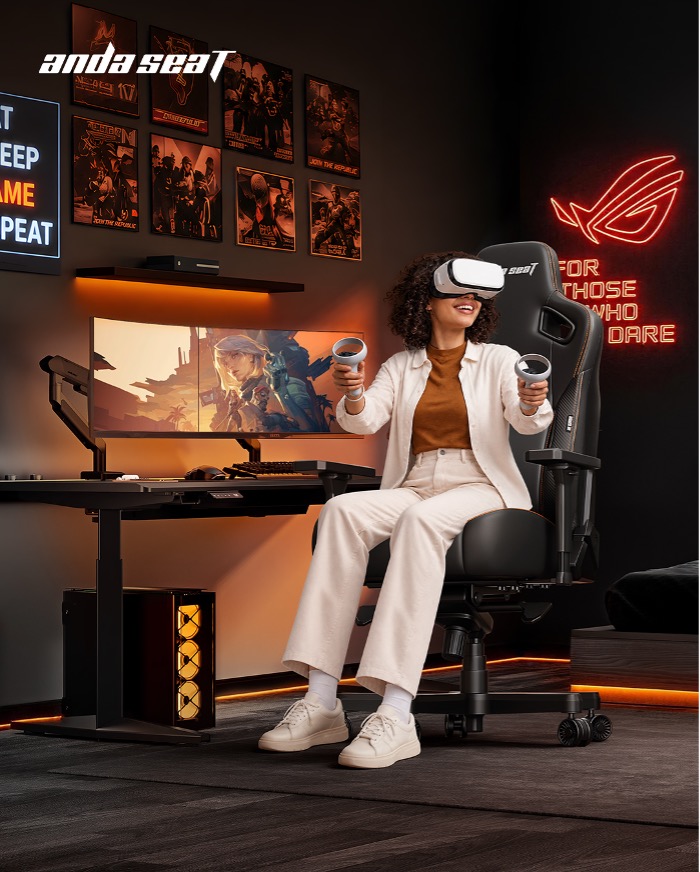
Kaiser 3 and Xtreme
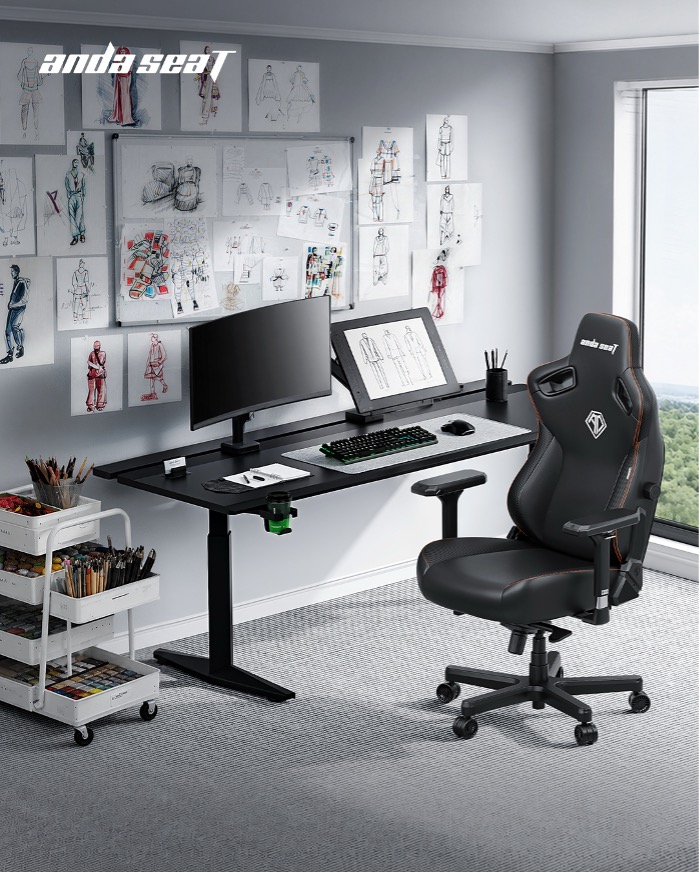
Kaiser 3 and Xtreme Desk

Kaiser 3 Chair and Xtreme Desk
AndaSeat Pre-Black Friday Campaign Connects Flexible Furniture With the Changing Geography of Home Work
SPOKANE, WA, UNITED STATES, October 9, 2026 /EINPresswire.com/ -- As part of its 2026 Pre-Black Friday campaign, AndaSeat is highlighting the Kaiser 3 Series chair and Xtreme Series standing desk against a changing reality of home-based work: the workstation is increasingly being built inside rooms that already have another purpose.A 2026 study published in Building and Environment examined 171 home workspaces used by teleworkers in Japan and found that dedicated offices represented only part of the picture. Living rooms were the most common telework location, used by one-third of participants, while bedrooms and dining areas also served as regular workspaces. Fewer than one-third of participants worked from a private study room.
The finding reflects a practical constraint that many furniture systems were not originally designed to handle. A bedroom may need to function as a workspace in the morning and return to a personal space at night. A living room can serve professional work, entertainment and gaming within the same day. A dining area may temporarily become a computer station before returning to household use.
AndaSeat is positioning Kaiser 3 and Xtreme around that condition: not as furniture for one dedicated “gaming room” or “home office,” but as a workstation system that can change with the role of the room.
Multi-Use Rooms Need Furniture That Changes Without Taking Over the Space
Traditional workstation design assumes a relatively permanent environment. The desk remains at one height, the chair is configured for one user, and computer equipment stays in place because the room itself exists primarily for work.
That assumption becomes less practical when work is inserted into a bedroom or shared living area. In those environments, furniture competes with the room’s original function. A desk can become visually dominant, cables remain visible after work is finished, and fixed furniture dimensions can make it difficult for the same area to support another activity.
A 2026 design study on adaptive furniture for home-office environments described this problem directly, arguing that fixed furniture is increasingly limited when residential spaces have to respond to changing work patterns and overlapping uses. The issue is not simply floor area; it is whether furniture can change state as the room changes purpose.
Xtreme addresses that challenge through a work surface that can move rather than remain permanently configured around one use. Kaiser 3 approaches the same issue from the seating side, allowing a single chair to shift between more upright desk work and more relaxed seated activity without introducing a second piece of task-specific furniture.
Xtreme Lets One Work Surface Serve Several Room States
The Xtreme Series provides electric height adjustment from 28.7 to 46.1 inches, allowing the complete desktop to move between different working levels while monitors, keyboards, laptops and accessories remain in place. Three memory presets allow frequently used heights to be stored, turning the desk into a repeatable configuration rather than a surface that must be manually reset every time the room changes function.
That capability matters differently in a multi-use room than it does in a dedicated office. One preset can support normal seated computer work, another can create a standing work surface, while a third can accommodate a different user or another activity. The desk therefore changes the spatial relationship between the user and equipment without requiring the equipment itself to be removed.
Xtreme is available in three desktop sizes, ranging from a more compact 47.2 × 29.5-inch surface to a 63 × 31.5-inch configuration. This allows the same product concept to operate in different room scales. A smaller bedroom workstation and a larger shared entertainment space do not necessarily require the same footprint, even when both need height adjustment and computer support.
The broader design idea is that flexibility begins before movement. A multi-use room benefits from furniture that can be selected according to the available footprint and then reconfigured within that footprint once installed.
Cable Infrastructure Determines Whether the Room Can Really Change Purpose
One of the less visible problems in a multi-purpose workstation is what remains after the screen goes dark.
Power strips, chargers and loose cables can make a temporary work area continue to look and function like a permanent office even when the workday has ended. In a dedicated office that may be unimportant; in a bedroom or living room it affects how easily the room can return to another use.
Xtreme routes its primary wiring through the desk structure and includes a steel cable tray beneath the work surface for power strips and excess cable length. The purpose is not simply to create a cleaner appearance during work. It is to keep more of the workstation infrastructure attached to the desk rather than distributed across the floor or surrounding furniture.
That becomes particularly relevant when the same room also supports gaming. A monitor, laptop, headset, controller and other peripherals can quickly increase the number of cables around a desk. Keeping much of that infrastructure consolidated beneath the surface reduces the amount of physical setup that remains visible when the activity changes.
In this context, cable management becomes part of room flexibility. A workstation that can change height but leaves its equipment infrastructure scattered across the room is only partially adaptable.
Kaiser 3 Allows the Seated Configuration to Change With the Activity
The room is not the only part of the setup that changes. The user also adopts different seated relationships depending on the activity.
Kaiser 3 provides up to 155 degrees of backrest recline, multi-position locking and approximately 15 degrees of rocking. These controls allow the chair to move from a more upright position for keyboard and mouse work toward more relaxed configurations for gaming, reading or general entertainment without replacing the chair itself.
Its integrated four-way lumbar system adds another level of adjustment, providing approximately 76 mm of vertical movement and 30 mm of depth control. Rather than relying only on a detachable cushion, lumbar support is built into the backrest and can be configured according to the user’s seated position.
The chair also uses 4D armrests that move vertically, forward and backward, laterally and through inward-outward rotation. This becomes useful in a room where the same chair may support typing at a desk during one part of the day and a more relaxed controller or media position later.
Kaiser 3 is offered in L and XL configurations, reflecting another reality of shared home spaces: flexibility is not the same as one-size-fits-all. The two versions provide different size and capacity ranges while retaining the same core adjustment concept.
Flexible Furniture Helps the Room Keep Its Original Identity
The current home-working discussion increasingly shows that not every household can or wants to dedicate an entire room to professional activity. The 2026 TELEWORK study found that living rooms, bedrooms and dining areas remain significant locations for home work, while other recent research has examined how domestic spaces become professional environments without losing their household roles.
That makes multi-use furniture a different design problem from conventional office furniture.
The goal is not necessarily to make a living room behave permanently like an office. It is to allow work to enter the space when needed without requiring the room to surrender all of its other functions.
Kaiser 3 and Xtreme address different layers of that problem. Xtreme allows the work surface and equipment infrastructure to change state within a defined footprint. Kaiser 3 allows the seated relationship to shift between focused work and more relaxed activity. Together, they reflect a broader workstation principle: when one room has several jobs, furniture needs to support several configurations without becoming several separate pieces of furniture.
AndaSeat’s Pre-Black Friday campaign includes selected workstation and seating products, with availability and campaign conditions varying by market.
About AndaSeat
Founded in 2007, AndaSeat develops ergonomic seating and workspace products for gaming, professional and home environments. Its portfolio includes ergonomic chairs, standing desks, monitor arms and related workspace accessories. AndaSeat’s product-development approach combines structural engineering, adjustable ergonomics and flexible workspace design around the changing ways people use bedrooms, home offices, gaming spaces and shared living environments.
AndaSeat Marketing
AndaSeat
+ +86 139 2232 2347
email us here
Visit us on social media:
LinkedIn
Instagram
Facebook
YouTube
TikTok
X
Legal Disclaimer:
EIN Presswire provides this news content "as is" without warranty of any kind. We do not accept any responsibility or liability for the accuracy, content, images, videos, licenses, completeness, legality, or reliability of the information contained in this article. If you have any complaints or copyright issues related to this article, kindly contact the author above.
