

i-PRO Develops World's First Camera for Real-Time Imaging of Multiple Biological Signals Using Fluorescence Technology
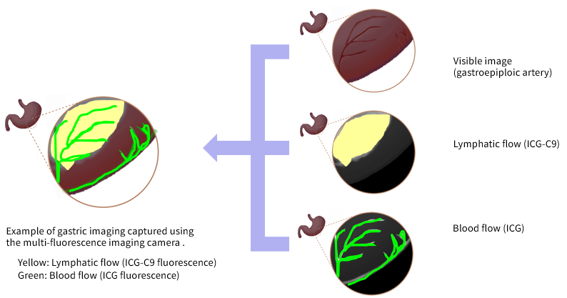
[Fig. 1] Simultaneous Visualization of Blood Flow and Lymphatic Flow Using a Multi-Fluorescence Imaging Camera (illustration)
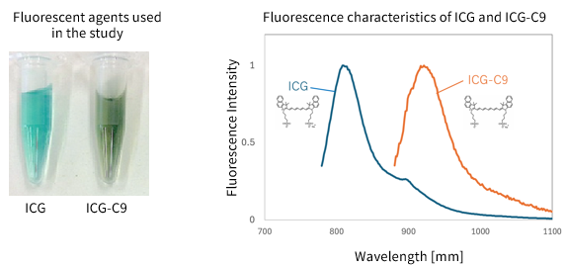
[Fig. 2] Differences in Fluorescence Characteristics between ICG and ICG-C9
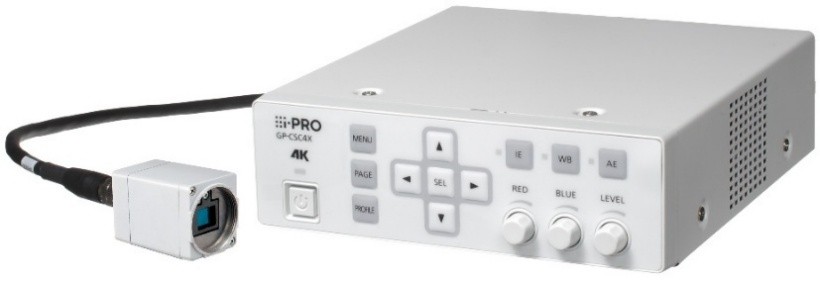
[Fig. 3] i-PRO Multi-Fluorescence Imaging Camera
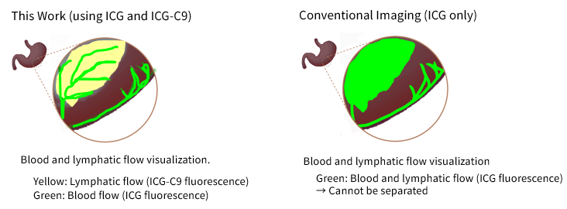
[Fig. 4] Comparison of the Multi-Fluorescence Imaging Camera (This work) with Conventional Imaging (illustration)
– Collaborative Research with Hokkaido University Demonstrates Separate Visualization of Blood Flow and Lymphatic Flow –
JAPAN, June 22, 2026 /EINPresswire.com/ -- i-PRO Co., Ltd., a global leader in professional security and public safety solutions, today announced the development of a multi-fluorescence imaging camera capable of capturing multiple fluorescence signals simultaneously. The system supports both the widely used indocyanine green (ICG) and a newly developed fluorescent agent, “ICG-C9,” from Hokkaido University, marking a significant advancement in real-time medical imaging.
In collaboration with Hokkaido University Hospital, i-PRO also demonstrated that this camera enables the simultaneous and distinct visualization of both blood flow and lymphatic flow in real time.
This technology is characterized by its ability to simultaneously acquire multiple types of biological information using multiple fluorescent reagents and to separately visualize them in real time. Through collaborative research with the university, we have achieved the world's first real-time simultaneous imaging of blood flow and lymphatic flow using two types of ICG-based fluorescence.
Moving forward, we will contribute to the development of new applications by combining this technology with various fluorescent reagents, thereby driving transformative innovation in image-guided surgery.
[Fig. 1] Simultaneous Visualization of Blood Flow and Lymphatic Flow Using a Multi-Fluorescence Imaging Camera (illustration)
(Example) Imaging example of the gastroepiploic artery and lymphatic flow acquired using a multi-fluorescence imaging camera
Background of the Collaborative Research
Fluorescence-guided surgery*1 is a surgical technique that uses fluorescent agents such as ICG to visualize biological information that is difficult to see with the naked eye. It is widely used to assess blood flow and lymphatic flow during surgery, and it is also being applied to support the identification of tumors, tissue boundaries, and important anatomical structures. However, conventional techniques are generally limited to visualizing one type of biological information with a single fluorescent agent at a time, making it difficult to simultaneously assess multiple types of biological information during surgical procedures.
To address this limitation, there has been a growing need for technologies that enable surgeons to make more informed intraoperative decisions through the simultaneous visualization of multiple biological parameters.
*1 Fluorescence-guided surgery: A technique that uses fluorescent agents, such as ICG, and a specialized camera to visualize blood flow and lymphatic flow during surgery.
New Fluorescent Reagent "ICG-C9"
Researchers at the Faculty of Advanced Life Science, Hokkaido University, developed a novel fluorescent reagent, “ICG-C9,” in April 2024, which emits fluorescence in a different wavelength range from conventional ICG.
This innovation enables multiple types of visualization using two distinct fluorescence signals, including the ability to distinguish and separately visualize blood flow and lymphatic flow, as well as the potential to support various combinations of visualization for identifying tumors, tissue boundaries, and important anatomical structures.
[Fig. 2] Differences in Fluorescence Characteristics between ICG and ICG-C9
Technical Overview of i-PRO's Multi-Fluorescence Imaging Camera
The multi-fluorescence imaging camera*² developed by i-PRO features a multi-channel architecture that allows the simultaneous capture of two fluorescence images in the infrared wavelength range, along with a white-light image.
In this collaborative research, non-clinical proof-of-concept experiments were conducted by leveraging the fluorescence characteristics of both ICG and ICG-C9. The results demonstrated that blood flow and lymphatic flow could be separately visualized using two fluorescence signals, whether ICG was used to evaluate blood flow and ICG-C9 to evaluate lymphatic flow, or vice versa.
In addition to visualizing blood and lymphatic flow, the experiments also confirmed the simultaneous visualization of tissue boundaries and important anatomical structures by combining ICG-based fluorescent agents with different fluorescence characteristics.
The multi-fluorescence imaging camera is optimized for the respective fluorescence characteristics of ICG and ICG-C9, enabling high-sensitivity imaging of each signal while suppressing crosstalk between them.
By accurately separating and displaying the two fluorescence signals, the system enables simultaneous and clear visualization of multiple types of biological information.
*² A patent application for this technology is currently pending.
<Key Features>
World’s first technology*3 enabling real-time simultaneous imaging and separation of two ICG-based fluorescence signals. *3 Based on i-PRO research
The system utilizes CMOS image sensors to simultaneously capture a white- light image and two fluorescence signals at different wavelengths, enabling high-precision separation and display with reduced crosstalk.
A new visualization platform capable of simultaneously integrating and acquiring multiple types of biological information.
[Fig. 3] i-PRO Multi-Fluorescence Imaging Camera
Experimental Results
In this collaborative research, i-PRO and Dr. Yusuke Watanabe at Hokkaido University Hospital, an expert in gastrointestinal surgery, confirmed a novel technology for simultaneously visualizing different types of biological information through clinically oriented imaging experiments using two types of ICG fluorescence (ICG and ICG-C9).
The multi-fluorescence imaging camera demonstrated the ability to simultaneously capture and separate two ICG-based fluorescence signals in real time. In one clinically oriented experiment, the system separately visualized blood flow, evaluated through intravenous administration of ICG, and lymphatic flow, visualized through local administration of ICG-C9. The results also suggest the potential of this technology to support various combinations of visualization for different types of biological information, including tissue boundaries and important anatomical structures, by leveraging ICG-based fluorescent agents with distinct fluorescence characteristics.
Furthermore, in pre-clinical trials, the system enabled simultaneous acquisition of visible-light images and multiple fluorescence images, allowing anatomical structures in the surgical field to be overlaid with functional information such as blood flow and lymphatic flow.
These results demonstrate that the multi-fluorescence imaging camera is an effective technology for simultaneously visualizing multiple types of biological information.
[Fig. 4] Comparison of the Multi-Fluorescence Imaging Camera (This work) with Conventional Imaging (illustration)
Significance and Future Applications
The core value of this technology lies in its ability to simultaneously acquire and differentiate multiple biological signals. This enables new imaging approaches that combine multiple fluorescent agents to simultaneously visualize different biological information depending on the application.
i-PRO will position this technology as a next-generation visualization platform and will continue expanding its applications in combination with various fluorescent agents.
The results of this collaborative research were presented by Hokkaido University at ISFGS (International Society for Fluorescence-Guided Surgery), an international conference held in the United States on June 20, 2026.
[About Hokkaido University]
For more information, please visit: https://www.hokudai.ac.jp/
[About i-PRO] https://i-pro.com/
i-PRO Co., Ltd., is a leading global manufacturer of edge computing cameras for security, safety, and medical applications. With over 60 years of expertise in high-quality and reliable hardware, the company now pioneers the transformation of video data into practical applications. i-PRO products are designed for flexible customization and integration to meet the specific needs of any use case.
We are committed to the ethical and responsible use of AI and cybersecurity for data integrity, and provide our partners, customers and users with innovative and sustainable technologies. i-PRO joined the United Nations Global Compact in 2023.
Click here to visit the medical vision camera website.
[Editorial Contacts]
For camera-related inquiries:
i-PRO Co., Ltd. — Medical Vision Division
Email: mv-pr(at)ml.i-pro.com
For reagent-related inquiries:
Faculty of Advanced Life Science, Hokkaido University
Prof. Kenji Monde
Email: kmonde(at)sci.hokudai.ac.jp
*Please replace “(at)” with “@” when sending your email.
For procedure-related inquiries:
Hokkaido University Hospital
Dr. Yusuke Watanabe
Contact Form: https://docs.google.com/forms/d/e/1FAIpQLScSJsG0APclzKkI9vqARGBxEUhSxyDMT4ra08PrMhOnxLLMSw/viewform
GLOBAL
Global PR Wire
email us here
Legal Disclaimer:
EIN Presswire provides this news content "as is" without warranty of any kind. We do not accept any responsibility or liability for the accuracy, content, images, videos, licenses, completeness, legality, or reliability of the information contained in this article. If you have any complaints or copyright issues related to this article, kindly contact the author above.
