

Your business and economy news reporter
Provided by AGP
Daily self-moxibustion during chemotherapy found to be feasible and acceptable
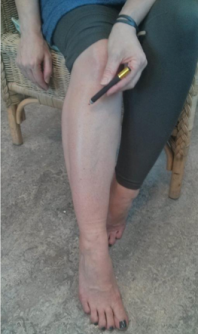
Health improvement practitioner demonstrating application of indirect moxibustion to acupuncture point Zusanli (ST36).
FAYETTEVILLE, GA, UNITED STATES, May 14, 2026 /EINPresswire.com/ -- A small United Kingdom (UK) feasibility study suggests that self-administered moxibustion may have a place in supportive cancer care—not yet as a proven way to prevent chemotherapy-related pancytopenia, but as a practical self-care approach that some patients can safely learn and use during treatment. The study focused less on proving efficacy than on a more pragmatic clinical question: whether patients undergoing chemotherapy could realistically adopt a brief daily moxibustion routine in real life. The answer was cautiously encouraging. Many participants were willing to try it, some found it helpful, and no serious adverse events linked to the intervention were reported.
Chemotherapy-induced pancytopenia remains a serious challenge in cancer care because falling blood counts can lead to treatment delays and dose reductions, with associated impact on survival, as well as potential infections, fatigue, and lower quality of life. Although granulocyte-colony stimulating factor (G-CSF) can help in some settings, it is not routinely indicated for every regimen and may add cost and side effects. Moxibustion, a traditional heat-based therapy used on acupuncture points, has been studied in East Asia for symptom relief and possible support of blood counts, yet it has rarely been tested in Western mainstream oncology care. Thus, there is a need to carry out in-depth research on whether self-administered moxibustion can be safely and practically integrated into conventional chemotherapy support.
Researchers from the East and North Hertfordshire National Health Service Trust, incorporating Mount Vernon Cancer Center in the United Kingdom, reported (DOI: 10.26599/eCMTA.2026.9570024) in Evidence-Based Chinese Medicine and Technology Assessment in 2026 that teaching patients to use daily self-moxibustion during chemotherapy was feasible and generally acceptable, while also identifying major practical challenges to be addressed before larger trials can test clinical benefit.
The uncontrolled single-arm study recruited 25 patients with breast, colorectal, or gynecological cancers receiving chemotherapy regimens for which G-CSF was not routinely indicated. Participants were taught to apply indirect smokeless moxibustion to Zusanli (ST36) in a simple procedure lasting less than 10 minutes a day, beginning before or around the start of chemotherapy and continuing through treatment. Of 54 patients approached, 25 consented, showing that interest in the intervention was substantial. Among 2,944 potential daily applications, 1,369 were recorded, giving an overall concordance rate of 46.5%, with individual adherence ranging from 4% to 96%. No participant was fully concordant. The main reasons for missed sessions were chemotherapy-related sickness, fatigue, moxibustion-related practical difficulties, and forgetfulness. Importantly, safety findings were reassuring: no serious adverse events and no burns were reported, although a few participants described mild discomfort or singeing of leg hair when the moxa stick was held too close.
Supportive cancer care aims to identify practical, safe ways to help patients stay engaged during difficult treatment. These findings are practical as much as clinical and the researchers conclude that moxibustion appears safe in this context and warrants further investigation. ..They recommend that future trials will benefit from tighter designs, reminder systems, uniform patient groups, and improved outcome collection. If those next-stage studies can show measurable benefit, self-moxibustion could emerge as a low-cost integrative option for selected patients seeking a more active role in supportive care during chemotherapy. For now, the study’s strongest message is that it is possible to test self-administered moxibustion seriously within modern cancer care.
References
DOI
10.26599/eCMTA.2026.9570024
Original Source URL
https://www.sciopen.com/article/10.26599/eCMTA.2026.9570024
Funding Information
The British Acupuncture Council (London, United Kingdom) funded this study.
Lucy Wang
BioDesign Research
email us here
Legal Disclaimer:
EIN Presswire provides this news content "as is" without warranty of any kind. We do not accept any responsibility or liability for the accuracy, content, images, videos, licenses, completeness, legality, or reliability of the information contained in this article. If you have any complaints or copyright issues related to this article, kindly contact the author above.
