

New Study Demonstrates Maximal Urethral Length Preservation Technique Preserves Penile Length After Prostate Surgery
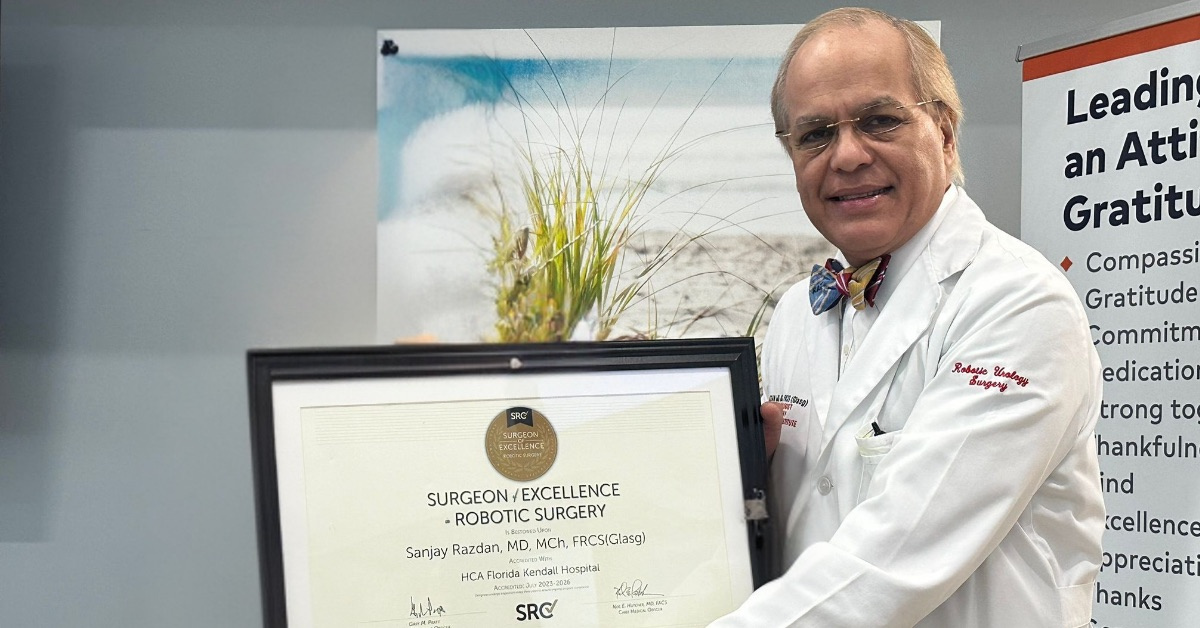
Dr. Sanjay Razdan
Dr. Sanjay Razdan's new peer-reviewed study shows the MULP technique significantly improves penile length preservation after robotic prostatectomy.
What the Study Found
The research examined the effect of a technique called Maximal Urethral Length Preservation, or MULP, on penile length in patients undergoing robot-assisted laparoscopic radical prostatectomy (RALP). In plain terms: researchers measured penile length before surgery and then tracked any changes over time afterward.
The study prospectively evaluated stretched flaccid penile length (SFPL) — a standard clinical measurement — in men with prostate cancer before and after robotic prostatectomy. Patients who received the MULP technique were compared with those who had standard surgical approaches.
The findings were clear: men who had their surgery performed using the MULP technique experienced significantly better penile length preservation. In other words, the way the surgeon handles the urethra — the tube that carries urine out of the body — during prostate removal can directly impact whether a man loses penile length afterward.
Why Does Penile Shortening Happen After Prostate Surgery?
To understand why this matters, it helps to understand a little anatomy. The prostate sits just below the bladder, wrapped tightly around the upper portion of the urethra. When the prostate is removed, the urethra must be cut and then reconnected to the bladder. The length of urethra that is preserved during this reconnection — called the urethral stump — plays a major role in how well a man recovers both urinary control and penile length.
Traditional techniques often sacrifice urethral length for easier surgical access. The MULP technique, pioneered by Dr. Sanjay Razdan, takes a more anatomically precise approach: preserving as much of the functional urethra as possible while still achieving full cancer removal. This preserves the natural support structures that maintain penile length.
Penile shortening after prostatectomy is thought to occur because of scar tissue formation, reduced blood flow to penile tissues, and loss of the structural "anchor" that the prostate and surrounding tissue provide. By keeping more of the urethra intact, MULP reduces some of these contributing factors.
Why This Matters for Patients
Penile shortening is one of the least discussed side effects of prostate surgery — but patients notice it, and it affects their quality of life. Studies have shown that many men report noticeable decreases in penile length following radical prostatectomy, and this can contribute to emotional distress, reduced sexual confidence, and difficulties in intimate relationships.
Many patients are not warned about this risk before surgery, or they assume it is unavoidable. This research demonstrates that it does not have to be. When performed by an experienced surgeon using the MULP technique, robotic prostatectomy can preserve not just continence and erectile function — the so-called "trifecta" of ideal outcomes — but also physical penile length.
About Dr. Sanjay Razdan and the International Robotic Institute for Prostate Cancer
Dr. Sanjay Razdan, MD, MCh, FRCS (Glasg), is the Professor and Chairman of the International Robotic Institute for Prostate Cancer in Doral, Florida. He is one of the most experienced robotic prostate cancer surgeons in the world, having performed over 10,000 procedures. In 2024, Newsweek recognized him as one of America's Best Prostate Cancer Surgeons.
Dr. Razdan is widely credited with pioneering the MULP technique and is considered the world leader in its application during robotic prostatectomy. The institute has also been the site of the world's first prospective randomized study using human amniotic membrane in robotic prostate surgery — another innovation aimed at improving post-surgical recovery of erectile function and continence.
What This Means if You Are Facing Prostate Cancer Surgery
If you are considering robotic prostatectomy for prostate cancer, it is worth asking your surgeon specifically about urethral length preservation techniques. The difference between surgeons in terms of how they handle the urethra during surgery is significant — and the data shows it affects real outcomes for real patients.
At the International Robotic Institute for Prostate Cancer, the goal is not just to cure cancer, but to ensure patients leave surgery with their quality of life intact. Outcomes here consistently show that a large proportion of patients achieve full urinary continence within days to weeks, and that the majority recover sexual function far sooner than with standard approaches.
Penile shortening may be a taboo topic, but it is a real concern — and this research shows it is now a preventable one in the hands of the right surgeon.
Source: Reddy BN, Razdan S, Razdan S. Robot assisted laparoscopic radical prostatectomy with maximal urethral length preservation technique preserves penile length. J Robot Surg. 2023;17(4):1525-1530. PubMed PMID: 36867324.
For appointments, contact the International Robotic Institute for Prostate Cancer at 305-251-8650. Located at 3650 NW 82nd Avenue, Suite PH 501, Doral, FL 33166.
Sanjay Razdan
International Robotic Institute for Prostate Cancer
+1 305-251-8650
email us here
Visit us on social media:
Instagram
YouTube
Preserving & Recovering Erectile Function After Prostate Cancer Surgery - Dr. Sanjay Razdan
Legal Disclaimer:
EIN Presswire provides this news content "as is" without warranty of any kind. We do not accept any responsibility or liability for the accuracy, content, images, videos, licenses, completeness, legality, or reliability of the information contained in this article. If you have any complaints or copyright issues related to this article, kindly contact the author above.
