

Hyperloop Technology Market to Reach US$21.69 Bn by 2031 | CAGR 38.86% | Capsule, Propulsion & Infrastructure Insights
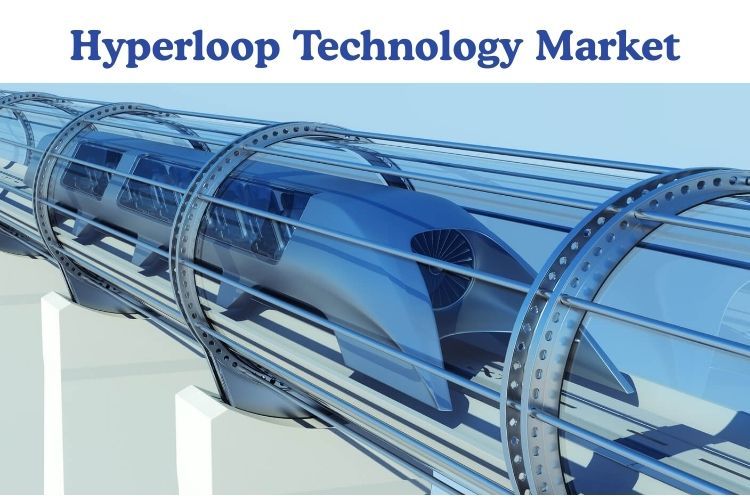
Hyperloop Technology Market
Hyperloop Technology Market to reach US$ 21.69 Billion by 2031 at 38.86% CAGR, driven by smart mobility, high-speed transport innovation, and PPP investments.
With a projected CAGR of 38.86%, the hyperloop market reflects rising global investments in smart mobility infrastructure, cargo-first deployment strategies, and next-generation passenger connectivity”
AUSTIN, TX, UNITED STATES, February 26, 2026 /EINPresswire.com/ -- According to DataM Intelligence, the Hyperloop Technology Market reached US$ 1.59 billion in 2023 and is expected to reach US$ 21.69 billion by 2031, growing with a CAGR of 38.86% during the forecast period 2024-2031. This exponential growth reflects increasing investments in smart mobility infrastructure, public-private partnerships, and ongoing pilot projects worldwide. The passenger transportation segment currently dominates due to rising demand for rapid urban connectivity, while North America leads geographically owing to strong R&D capabilities, venture funding, and early regulatory development frameworks.— DataM Intelligence
The Hyperloop Technology Market is emerging as one of the most transformative segments within the advanced transportation and smart infrastructure industry. Hyperloop is a next-generation transportation system that enables passenger and cargo pods to travel through low-pressure tubes at extremely high speeds, significantly reducing friction and energy consumption. By combining magnetic levitation technology, electric propulsion, and near-vacuum tube systems, hyperloop transportation aims to bridge the speed gap between high-speed rail and air travel while maintaining sustainability and cost efficiency. As urbanization accelerates and global mobility demands intensify, hyperloop systems are gaining traction as a viable long-term solution for intercity and regional transport networks.
Key Highlights from the Report:
➤ The Global Hyperloop Technology Market is projected to grow at a remarkable CAGR of 38.86% between 2024 and 2031.
➤ Passenger transportation dominates the market due to increasing demand for ultra-fast intercity travel.
➤ North America leads the market, supported by early-stage pilot projects and strong private investment.
➤ Asia-Pacific is anticipated to witness the fastest growth driven by infrastructure modernization and smart city initiatives.
➤ Advancements in magnetic levitation and linear propulsion systems are accelerating commercialization efforts.
➤ Public-private partnerships and government-backed feasibility studies are critical to long-term deployment.
➢ Get a Exclusive Sample PDF Of This Report (Get Higher Priority for Corporate Email ID):- https://www.datamintelligence.com/download-sample/hyperloop-technology-market
Recent Developments:
October 2025: Virgin Hyperloop announced successful high-speed component validation tests for its next-generation levitation and propulsion systems, targeting improved energy efficiency and reduced infrastructure costs. The development strengthens commercial feasibility for intercity cargo and passenger corridors.
September 2025: HyperloopTT unveiled an advanced capsule design integrating lightweight composite materials and AI-enabled predictive maintenance systems. The innovation enhances passenger safety, operational reliability, and lifecycle cost optimization.
July 2025: Hardt Hyperloop completed a new phase of full-scale switch testing at the European Hyperloop Center, demonstrating seamless lane-switching capability for high-speed pods an important milestone for scalable hyperloop networks across Europe.
June 2025: Zeleros secured additional funding to accelerate development of its linear motor propulsion technology and vacuum tube infrastructure. The funding supports pilot deployment initiatives aimed at freight and airport connectivity applications.
May 2025: China Aerospace Science and Industry Corporation advanced testing of its maglev-based ultra-high-speed transport system capable of reaching speeds above 1,000 km/h, reinforcing Asia’s competitive landscape in next-generation vacuum transport technologies.
Mergers & Acquisitions:
November 2025: Virgin Hyperloop entered a strategic acquisition agreement with a European vacuum systems engineering firm to strengthen its tube manufacturing and pressure control capabilities, enhancing commercialization readiness.
September 2025: HyperloopTT partnered with a Middle Eastern infrastructure investment group to establish joint ventures focused on regional hyperloop corridor development and public-private deployment models.
August 2025: Hardt Hyperloop acquired a propulsion electronics startup specializing in high-efficiency inverters and control algorithms, reinforcing its integrated drive and levitation systems portfolio.
June 2025: Zeleros completed a technology acquisition of a smart sensor and monitoring company to enhance real-time diagnostics, structural health monitoring, and safety assurance across hyperloop infrastructure networks.
Country-Level Growth & Investment Analysis:
United States
The U.S. remains a leading innovation hub driven by companies such as Virgin Hyperloop, with strong focus on cargo-first deployment models, regulatory sandbox testing, and integration with existing freight rail corridors; federal and state-level infrastructure modernization programs support feasibility studies in high-density intercity routes.
Netherlands
The Netherlands is emerging as Europe’s testing nucleus through Hardt Hyperloop, supported by the European Hyperloop Center, emphasizing cross-border passenger corridors, switching technology validation, and EU-aligned sustainability standards.
Spain
Spain is strengthening its position via Zeleros, focusing on scalable propulsion systems and cost-efficient tube manufacturing, with strategic alignment toward connecting major logistics hubs and ports across Southern Europe.
Canada
Canada is advancing feasibility in long-distance freight corridors led by TransPod, leveraging public-private partnerships and targeting ultra-high-speed cargo transport between industrial regions to reduce trucking emissions.
China
China is accelerating ultra-high-speed vacuum transport development through China Aerospace Science and Industry Corporation, integrating maglev and aerospace-grade vacuum technologies, with government-backed pilot projects aimed at achieving speeds above 1,000 km/h.
United Arab Emirates
The UAE is positioning itself as a Middle East hyperloop pioneer through feasibility collaborations with HyperloopTT, driven by smart city initiatives, high-speed passenger connectivity goals, and diversification beyond oil-based revenues.
India
India is exploring hyperloop adoption for high-density routes such as Mumbai–Pune, supported by state-level transport innovation policies and international technology partnerships, with emphasis on reducing travel time and easing urban congestion.
➢ Buy Now & Unlock 360° Market Intelligence:https://www.datamintelligence.com/buy-now-page?report=hyperloop-technology-market
Competitive Landscape
Hyperloop Transportation Technologies
The Boring Company
Hardt B.V.
Zeleros
Dinclix GroundWorks Private Limited
Nevomo
Swisspod Technologies
Virgin
Transpod
AECOM
Market Segmentation:
The market is segmented by transportation system, carriage type, speed, and region, reflecting the structural and operational components of next-generation high-speed mobility solutions such as hyperloop systems.
By transportation system, the market includes capsule, guideway, propulsion system, and route infrastructure. The capsule segment represents the passenger or cargo pod that travels within a low-pressure tube, designed with advanced aerodynamics and safety systems. Companies such as Virgin Hyperloop have developed prototype capsules aimed at achieving ultra-high-speed ground travel. The guideway segment includes the tube or track structure that maintains a near-vacuum environment to reduce air resistance. Propulsion systems are critical components that enable acceleration and sustained high speeds, often using linear electric motors and magnetic levitation technologies. The route segment covers the overall corridor infrastructure, including terminals, pylons, vacuum pumps, and control systems. Significant infrastructure planning and regulatory coordination are required for route deployment, making it one of the most capital-intensive segments.
By carriage type, the market is divided into passenger and cargo/freight systems. Passenger hyperloop systems are being developed to provide ultra-fast intercity travel, potentially reducing travel times between major metropolitan hubs from hours to minutes. Cargo or freight systems focus on rapid logistics movement, offering high-speed, energy-efficient transportation for time-sensitive goods. Several developers, including Hyperloop Transportation Technologies, are exploring freight-focused models to accelerate commercialization due to comparatively lower regulatory hurdles than passenger systems.
By speed, the market is segmented into commercial and infrastructure development phases, with operational targets categorized as more than 700 kmph and less than 700 kmph. Systems designed for speeds exceeding 700 kmph aim to compete directly with short-haul aviation by drastically cutting travel times. Lower-speed systems (below 700 kmph) may focus on regional or cargo applications where infrastructure constraints or safety regulations limit maximum velocity. Achieving sustained speeds above 700 kmph requires advanced propulsion, precise vacuum control, and highly engineered guideway structures.
Regional Insights:
North America currently dominates the Hyperloop Technology Market, supported by robust innovation ecosystems and early pilot projects. The presence of established technology startups and engineering companies has accelerated R&D activities, testing facilities, and feasibility studies. Regulatory agencies are also working toward defining safety and operational standards to facilitate commercialization.
Europe represents a promising market due to its strong emphasis on carbon neutrality and green transportation. The region’s commitment to reducing short-haul air travel emissions aligns with hyperloop’s low-energy transportation model. Several European corridors are under evaluation to integrate hyperloop into existing multimodal transit systems.
Asia-Pacific is projected to witness the fastest growth rate during the forecast period. Rapid urbanization, expanding megacities, and infrastructure investment programs in countries such as India and China are creating substantial opportunities for next-generation transport solutions. Government-backed smart mobility initiatives and foreign technology collaborations are further boosting regional growth.
The Middle East is also emerging as a strategic market, driven by ambitious infrastructure megaprojects and the region’s vision for advanced, high-speed connectivity across economic zones.
Market Dynamics:
Market Drivers
The exponential growth of the Hyperloop Technology Market is primarily driven by increasing global demand for ultra-high-speed transportation systems. As population density in urban areas continues to rise, existing rail and air transport networks face capacity constraints. Hyperloop systems offer a solution capable of reducing travel times between cities by more than 50%, enhancing economic integration and workforce mobility.
Another critical driver is the push toward sustainable and low-carbon transportation. Hyperloop systems operate on electric propulsion and can integrate renewable energy sources, reducing dependence on fossil fuels. Compared to aviation and conventional rail, hyperloop technology has the potential to significantly lower greenhouse gas emissions, aligning with global climate commitments.
Technological advancements in vacuum engineering, materials science, and magnetic levitation are also propelling the market forward. Continuous improvements in capsule design, structural integrity, and digital control systems are enhancing operational feasibility and investor confidence.
Market Restraints:
Despite strong growth projections, the Hyperloop Technology Market faces several challenges. High infrastructure costs remain a primary barrier, as constructing vacuum-sealed tubes over long distances requires complex engineering and significant capital investment. Land acquisition and regulatory approvals can further delay project implementation.
Safety validation and public acceptance also present hurdles. As a relatively new mode of transportation, hyperloop systems must undergo extensive testing to ensure passenger safety and reliability. Regulatory uncertainty in certain regions may slow commercialization timelines.
Additionally, energy efficiency optimization and system scalability remain technical challenges that companies must address before achieving widespread deployment.
Market Opportunities:
The market offers significant opportunities in cargo logistics and smart city development. Hyperloop cargo systems can dramatically reduce delivery times between distribution hubs, benefiting industries such as pharmaceuticals, automotive, and high-value electronics. Integration with digital supply chain platforms can further enhance operational efficiency.
Emerging economies investing heavily in infrastructure modernization represent untapped growth potential. Strategic partnerships between governments and private technology providers can accelerate corridor development in high-density economic zones.
Furthermore, advancements in renewable energy integration and energy storage technologies can strengthen hyperloop’s position as a sustainable mobility solution.
Get Customization in the report as per your requirements:https://www.datamintelligence.com/customize/hyperloop-technology-market
Reasons to Buy the Report:
✔ In-depth analysis of market size, growth rate, and revenue forecasts from 2024 to 2031.
✔ Detailed segmentation insights across components, transportation type, and applications.
✔ Regional analysis highlighting high-growth investment opportunities.
✔ Competitive landscape evaluation with strategic developments and partnerships.
✔ Actionable recommendations for stakeholders in transportation infrastructure and mobility innovation.
Conclusion:
The Global Hyperloop Technology Market is poised for remarkable expansion, rising from US$ 1.59 billion in 2023 to an estimated US$ 21.69 billion by 2031 at a CAGR of 38.86%. This growth underscores the increasing global commitment to next-generation transportation systems that combine speed, efficiency, and sustainability.
While challenges related to infrastructure costs, regulatory approvals, and technological scalability persist, ongoing innovation and strong government support are gradually addressing these concerns. As hyperloop systems transition from pilot projects to commercial deployment, they have the potential to redefine global mobility, reshape logistics networks, and set new standards for high-speed, low-emission transportation worldwide.
Related Reports:
Deception Technology Market
Flip Chip Technology Market
Sai Kiran
DataM Intelligence 4market Research LLP
+1 877-441-4866
email us here
Visit us on social media:
LinkedIn
YouTube
X
Legal Disclaimer:
EIN Presswire provides this news content "as is" without warranty of any kind. We do not accept any responsibility or liability for the accuracy, content, images, videos, licenses, completeness, legality, or reliability of the information contained in this article. If you have any complaints or copyright issues related to this article, kindly contact the author above.
